Is the London Eye Worth It? An Honest Verdict on the Price, the View and the Queue
One rotation gives you a moving view of Westminster. Its value depends on your plans, visibility and the price for your party.
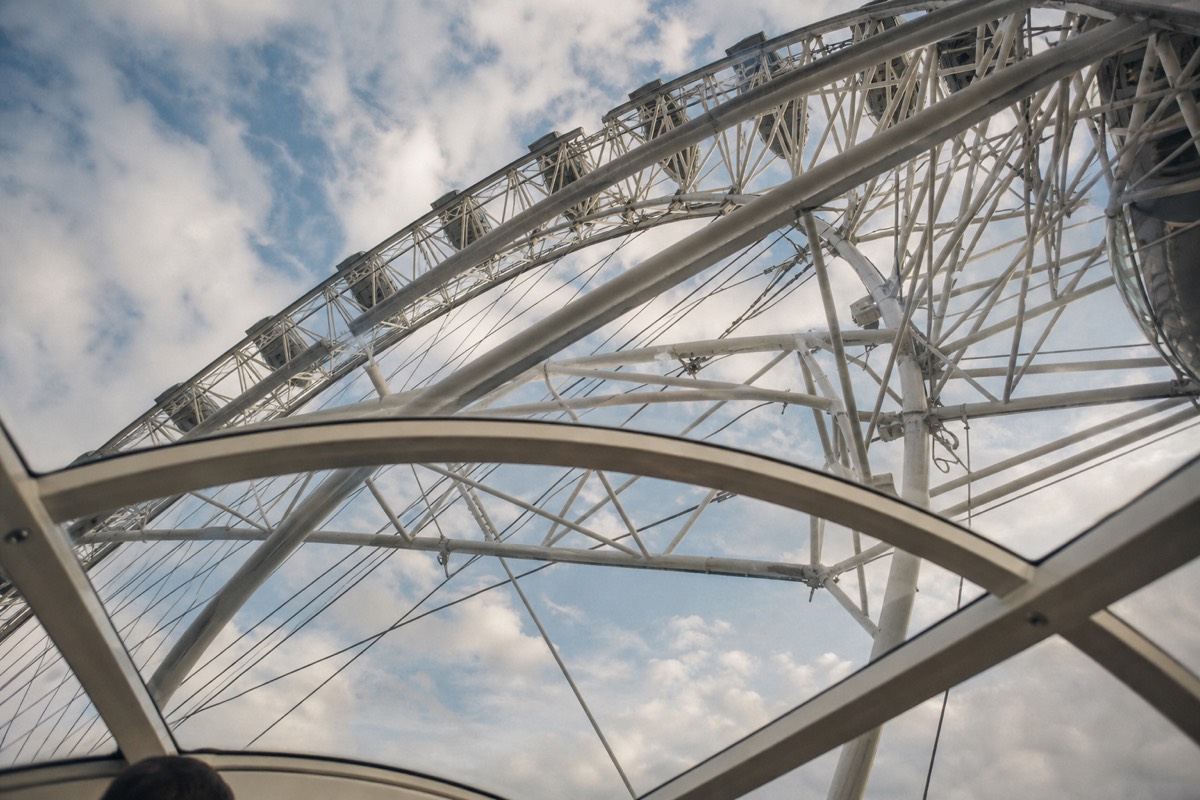
Short answer
For many first-time visitors, yes: the moving view of Parliament and the Thames is the main reason to pay. It is a weaker choice on a low-cloud day, on a tight budget, or when a free viewpoint meets your needs.
Thirty minutes is the whole product. One slow rotation, no second lap, and then you walk back out onto the South Bank. Whether the quoted price is worthwhile depends on the view you want, how much time you have and what else you could do with that money.
Is the London Eye worth the money?
For a first visit to London, often yes: the changing view of Parliament and the Thames is distinctive, and the rotation takes about half an hour. It is a weaker buy on a low-visibility day, for repeat visitors, or for anyone who would rather spend the money elsewhere.
The price you pay changes the calculation. Compare the same date and party across these ticket types rather than treating an advertised starting price as your total.
| Ticket | What the price buys | Value question |
|---|---|---|
| Standard | One shared-capsule rotation | Is the Westminster view worth your party total? |
| Fast Track | Same rotation with priority entrance | Is the quoted upgrade worth reducing the boarding queue? |
| Champagne | Hosted rotation, Champagne, lounge and Fast Track | Are the occasion extras important? |
| Eye and SEA LIFE | Two separate admissions | Do you want both attractions? |
The Fast Track premium should buy you something you actually need. Compare the quoted upgrade with the value you place on time; it does not buy a different view.
What do the numbers actually say about the London Eye?
The most useful numbers describe the experience: a 135-metre wheel, 32 enclosed capsules and a rotation of about 30 minutes. Review scores can add context, but a snapshot rating is not a guarantee of your weather, queue or enjoyment.
Judge recent reviews by the reasons behind them. Comments about the view, boarding and value answer different questions; choose the ones that matter to your visit.
| What it is | The figure |
|---|---|
| Height | 135 metres |
| Capsules | 32 enclosed pods |
| One rotation | Around 30 minutes |
| Public opening | 9 March 2000 |
The capsule detail matters for comfort. These are not open gondolas: each one is a sealed, climate-controlled pod you can walk around inside, which is why the ride works in February and why nobody has to hold on to anything. There is a piece of trivia hiding in the numbering too. The capsules run from 1 to 33 and skip number 13, so the wheel carries 32 of them. The origins of that, and of the Millennium Wheel name itself, are covered in the guide to what the London Eye is and where its name comes from.
What do you actually get for the price?
A slow, continuous 135-metre climb in a shared glass capsule, roughly 30 minutes end to end, with a sightline across the Houses of Parliament, the Thames as it bends through the middle of the city, and on clear days a horizon that runs well past the M25.
The physical experience is worth describing accurately, because a lot of the disappointed reviews come from a mismatch of expectations. The wheel normally rotates slowly during boarding and can be stopped when required. This is an observation experience rather than a thrill ride. What you get instead is a viewing platform that changes its angle continuously for half an hour.
That continuous movement is the real difference from a static observation deck. On a fixed floor you find your spot and stay. Here the composition shifts the whole time: Westminster is below you, then level, then behind you. Photographers tend to rate this highly, and the glass is a bigger obstacle than the height.
There is one asymmetry to plan around. The best light on the Palace of Westminster comes late in the day, and the best distance visibility usually comes after rain has cleared. Those two rarely coincide. Which one you chase is the whole subject of the guide on whether the London Eye is better by day or after dark.
Is it worth going up the London Eye if London has free viewpoints?
This is the strongest argument against, and it deserves a straight answer. Sky Garden is free, 155 metres up, and gives a 360-degree view. If your only goal is to look at London from height without paying, the London Eye is not the efficient choice.
The honest counter is that they are not the same product. Sky Garden is a fixed indoor space on the 35th floor of a City office building, entered on a free timed ticket available up to around three weeks ahead, with a one-hour slot and a bar attached. The London Eye is a moving structure on the river, positioned directly opposite Parliament, and it puts you above the water rather than above the office district.
Position explains a lot of the price gap. From the City, Westminster is a distant cluster on the horizon. From the wheel, Big Ben is close enough to read the clock face. If the photograph you want is the classic Thames-and-Parliament frame, no free viewpoint in London substitutes for it.
Where the free option genuinely wins: repeat visitors, budget travel, and anyone who wants a long, unhurried look rather than a timed half hour. The full three-way comparison against the Shard and Sky Garden, including heights and booking mechanics, sits in the London Eye versus the Shard guide.
What are the real reasons to skip it?
Weather, price and queues are the main reasons to skip it. Low cloud can flatten the view, the party total may exceed your budget, and standard entry can involve a substantial wait on a busy day.
Four situations where the money is better spent elsewhere:
- The cloud base is low. The capsule is comfortable in any weather, but the view is the product. On a genuinely murky day you are paying a view price for a fog price experience.
- You are counting every pound. Add up the selected-date cost for every paying member of your family. That is a real constraint, not a snobbery point.
- You have already done it. A repeat ride may offer less novelty, although different light and visibility can change the experience.
- You hate crowds and refuse to pre-book. Turning up on the day at 2pm in August is the worst version of this attraction.
None of those are arguments that the wheel is bad. They are arguments that it is specific. It does one thing extremely well and nothing else at all, and a ticket that does one thing has to match your day precisely to be worth it.
Weather stoppages can affect an outdoor observation wheel. Check the conditions attached to your selected ticket before paying: cancellation deadlines, changes and operator closures are different policies, and a poor view does not automatically create a refund entitlement.
Longevity is the other quiet reassurance. The wheel was originally granted only temporary five-year planning permission, which is why it kept being described as a millennium structure long after 2000. That question is now settled: Lambeth Council secured its long-term future on the South Bank beyond 2028, and its operator, Merlin Entertainments, announced the decision publicly in 2024. It is no longer a temporary landmark that might vanish, which changes the "see it before it goes" argument that used to sit in these comparisons.
Compare current totals for your date and party before paying. Keep currency, ticket type and cancellation conditions consistent across the options.
Is fast track worth the extra cost?
Fast Track is most useful when a shorter boarding queue matters to your day. It buys priority entrance, not a different capsule, rotation or view; security and boarding can still take time.
The way to decide is to price your own time honestly. Compare the actual upgrade total with how much flexibility remains in your itinerary. If your day is open-ended, standard admission may be enough.
There is a middle route worth knowing about. The single listing tracked on this site covers both options, with the choice made at checkout rather than across two separate products, so compare both options before purchasing. The detailed queue-time comparison lives in the fast track versus standard guide.
How much time should you spend at the London Eye?
Budget 60 to 90 minutes in total. The rotation itself is around 30 minutes. The rest goes on arrival, bag check, boarding and the walk back out, and it stretches considerably at peak times without a fast-track slot.
Allow time for arrival instructions, security, the boarding queue and the 30-minute rotation. Queue length varies with operations and attendance; a planning allowance is not a boarding guarantee.
Fast Track can shorten the boarding queue, but do not build a tight onward connection around an assumed saving.
If sunset is your priority, check which slots are offered on your date before arranging dinner. Seasonal opening hours and the sunset time both matter.
Is it worth upgrading for a special occasion?
If the visit is the occasion rather than part of a sightseeing list, the Champagne Experience may justify its premium. It adds a host, lounge access, Fast Track and a glass of Champagne to the same shared-capsule rotation.
What the premium actually covers is the shape of the visit rather than the ride. You wait in the Eye Lounge rather than the general queue, a host meets you, boarding is priority, and there is a glass of Moët and Chandon Impérial Brut champagne in your hand for the rotation. The capsule is shared with other guests, so this is a better service tier rather than a private hire.
For a birthday, an anniversary or a proposal, that reframing is the point. The complaint that most damages a standard-ticket review, standing in a long line before a short ride, is what priority entrance is designed to reduce.
Is the London Eye worth it with children?
Usually yes, with one caveat: the ride is about 30 minutes of looking, not doing. Check the age bands and ticket requirements for your chosen booking; enclosed capsules do not guarantee that every child will be comfortable with heights.
Younger children do best when the wheel is paired with something more active, which is where the combo tickets earn their place. The aquarium directly beneath the wheel is the natural partner: indoors, dark, warm, and about ninety seconds' walk away, so a family gets a second attraction without a tube journey between them.
Under-16s need an accompanying adult. Fold buggies before joining the boarding queue and keep them folded until you leave; the operator also describes a storage option. Follow your selected ticket’s age and admission instructions.
The admission listing labels the experience wheelchair accessible and describes a carer provision. Capacity and booking arrangements still need confirmation for your party; do not assume every mobility device can be accommodated.
So who should actually buy a ticket?
First-time visitors, photographers, families pairing it with a South Bank attraction, and anyone marking an occasion. Repeat visitors, tight budgets and low-cloud days are the honest exceptions.
| If this is you | Verdict | Why |
|---|---|---|
| First visit to London | Worth it | The Parliament and Thames sightline has no free substitute |
| Photographer | Worth it | Continuous change of angle over 30 minutes, best near sunset |
| Family with children 5 to 15 | Worth it, ideally as a combo | The wheel alone is short; pairing it fills the afternoon |
| Marking a birthday or proposal | Worth the upgrade | Lounge, host and priority boarding change the whole visit |
| Been before | Marginal | Nothing changes between visits except the light |
| On a strict budget | Skip or wait | Free height exists in London if the view is all you want |
| Booked into a low-cloud day | Review your options | Changes or cancellation depend on the terms and deadline of your booking |
The final decision is whether the moving Westminster view belongs in your trip. A ticket delivers roughly half an hour on the wheel; neither a review score nor a more expensive boarding option can promise clear skies.
What else do people ask before booking?
Is the London Eye really worth it?
For a first visit with useful visibility, the changing view of Parliament and the Thames can justify the ticket. A repeat visit, tight budget or low-cloud forecast makes the case weaker.
Is it worth going up the London Eye at night?
After dark you trade distant views for illuminated landmarks. Look for an offered slot that matches sunset or darkness on your date; opening hours vary seasonally.
How much time should you spend at the London Eye?
A planning allowance of 60 to 90 minutes may suit an ordinary visit, but queues and operations can make it longer. The rotation is about 30 minutes; arrival, security and boarding are additional.
Is it cheaper to book London Eye entry online?
The operator promotes advance online savings, but your selected date and ticket type determine the actual total. Compare those totals rather than assuming a fixed saving for every ticket.
Which is better, Sky Garden or the London Eye?
Sky Garden offers a free static view from the City, with timed tickets available in advance. The London Eye is a paid moving viewpoint opposite Parliament. Budget favours the former; the close Westminster perspective favours the wheel.
Choose Your London Eye Experience
Have your date ready? Check London Eye Standard or Fast Track Ticket before arranging the rest of your London day.
London Eye Standard or Fast Track Ticket. A 30-minute rotation. Choose standard or fast-track boarding; security and some waiting remain. Reserve the dated option that suits your party.
Tailor Your Ticket Choice And Compare Costs
- London Eye Champagne Experience: A shared-capsule 30-minute ride with fast-track entrance, an English host, Eye Lounge access and a glass of champagne for adults aged 18+. Security screening still applies.
- SEA LIFE London + London Eye Combo: SEA LIFE and standard London Eye entry. The initial slot is for SEA LIFE; reserve the Eye separately with your voucher. Transport and food are extra.
Choose dates directly on GetYourGuide
Confirm your visit date on the booking page before payment.