How Much Money Does the London Eye Make a Day?
No daily revenue figure is published for the London Eye, but the real visitor numbers and ticket prices support a defensible estimate.
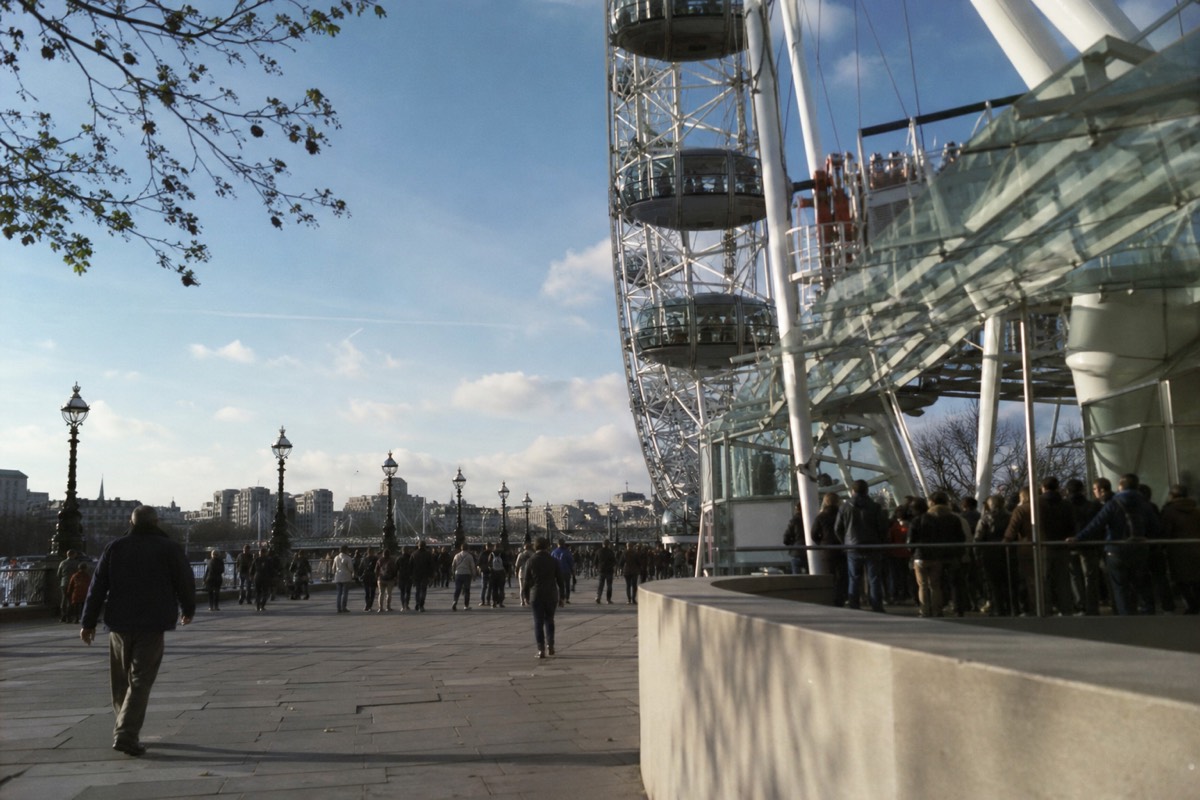
Nobody publishes it. That is the first thing to say, because a lot of pages answering this question print a confident number to two decimal places and none of them are quoting a disclosed figure. Merlin Entertainments, which operates the wheel through London Eye Management Services Limited, does not release daily takings for the London Eye. Neither does the official site. There is no filing, no press release and no statement that says "the London Eye made X yesterday".
What does exist are two real, verifiable numbers, and with those you can build an estimate that is honest about being an estimate. That is worth more than a fake precise answer, so here is how it works.
The two numbers worth building on
The first is visitor volume. As of 2025, the London Eye has carried more than 85 million passengers since it opened in 2000, and takes over three million visitors a year. That makes it a major visitor attraction, but volume alone does not reveal its takings.
The second is what a ticket costs. The operator currently lists standard adult admission from £29 online and £39 walk-up, with children aged 2 to 15 from £26 online and under-2s free. Those starting prices are not an average realised yield: prices vary by date and option, and fast-track upgrades and multi-attraction tickets change the mix.
The rough arithmetic
Three million visitors spread flat across 365 days is roughly 8,200 people a day. Multiply that by an average realised ticket somewhere between £25 and £40, which is an illustrative assumption rather than a disclosed average, allowing for child rates, promotions and premium options, and you land somewhere around £200,000 to £330,000 a day in admission money.
Scale that back up and it implies annual ticket takings in the high tens to low hundreds of millions of pounds. That is the order of magnitude. It is arithmetic performed on two public numbers, not a figure anyone has confirmed, and we are labelling it as such rather than dressing it up.
Why the real number is nothing like that number
Four things break the flat average, and they break it hard.
Seasonality is the obvious one. A wet Tuesday in January and a Saturday in the first week of August are not the same business. The wheel has Christmas Day and annual maintenance closures, and the queue on the South Bank in high summer bears no resemblance to the queue in February half-light, and a daily average smooths away the thing that actually characterises the operation.
Discounting is the one people forget. The share of visitors paying the full walk-up rate is not disclosed. Online booking is cheaper by design, rail promotions and voucher deals shave more off, family and child rates cost less again, and the summer promotion above pushed the standard online adult rate below £26 for ten weeks. The mix of discounts and premium purchases means the real average yield cannot be read from a headline starting price.
Then there is the fact that a large share of what gets sold is not a single admission at all. Plenty of visitors arrive on a bundle: the wheel plus SEA LIFE London, the wheel plus Madame Tussauds and SEA LIFE, the wheel plus a Thames cruise and a hop-on hop-off bus pass. Whatever slice of a bundled price ends up booked against the London Eye is an internal allocation nobody outside the company gets to see.
And admission is not the whole business anyway. The champagne experience, retail, photography and events all sit on top of ticket money, and none of them appear in the arithmetic above. That is the one factor pushing the true figure up rather than down, and it is completely invisible from outside.
Why we will not print a single number
Because we would be making it up. The gap between "roughly £200,000 to £330,000 a day in ticket money, averaged flat, before discounting and before every other revenue line" and "the London Eye makes £287,000 a day" is the difference between reasoning from evidence and inventing a fact. The second version is more quotable, gets copied faster, and is exactly the sort of thing that ends up cited back as though someone measured it.
If a hard figure ever gets published, it will come from Merlin or from the attraction itself, and it will be a lot more interesting than an average. Until then, what you can genuinely say about the London Eye's daily business is this: it is a machine that carries several thousand paying people per day on an annual-average basis, has done so for a quarter of a century and 85 million passengers, but the visitor count does not disclose the average amount each person pays.
For your own purposes, the number that actually matters is much smaller and entirely knowable: what one ride costs on the date you want it. That one is live, and it is on the listing.
Choose Your London Eye Experience
Working out your London budget? Check the price for your actual party and date, then compare only the extras you intend to use.
London Eye Standard or Fast Track Ticket. A 30-minute rotation. Choose standard or fast-track boarding; security and some waiting remain. Reserve the dated option that suits your party.
Tailor Your Ticket Choice And Compare Costs
- Madame Tussauds, London Eye & SEA LIFE Combo: Entry to Madame Tussauds, the Eye and SEA LIFE. Start at Madame Tussauds and reserve the other visits using the voucher; the current listing specifies seven days.
- London Eye Champagne Experience: A shared-capsule 30-minute ride with fast-track entrance, an English host, Eye Lounge access and a glass of champagne for adults aged 18+. Security screening still applies.
Choose dates directly on GetYourGuide
Confirm your visit date on the booking page before payment.